

Funded by the EU LIFE Programme — LIFE25-CET-REAHUBREAHUB
What to its all about
Advancing Energy Performance Assessment to Enable Holistic Building Renovation within Sustainable Urban Development Strategies
REAHUB connects building performance, urban planning and sustainability data into one integrated framework, helping cities identify where renovation delivers the greatest environmental, social and economic impact.
❋ Holistic Renovation IntelligenceBy combining Energy Performance Certificates, Smart Readiness Indicators, Renovation Passports and urban data, REAHUB provides the evidence needed to prioritise investments, reduce risk and support better renovation strategies.
❋ Smarter Decision-MakingThe project bridges long-term planning with real building interventions, ensuring that lessons from renovation projects continuously improve future policies, standards and investment decisions.
❋ From Strategy to ImplementationThrough a digital platform, practical tools and training resources, REAHUB empowers municipalities, policymakers, financial institutions and building professionals to accelerate high-quality renovation at scale.
❋ Building Capacity Across EuropeLatest
New REAHUB project launches to advance integrated, data driven building renovation across Europe
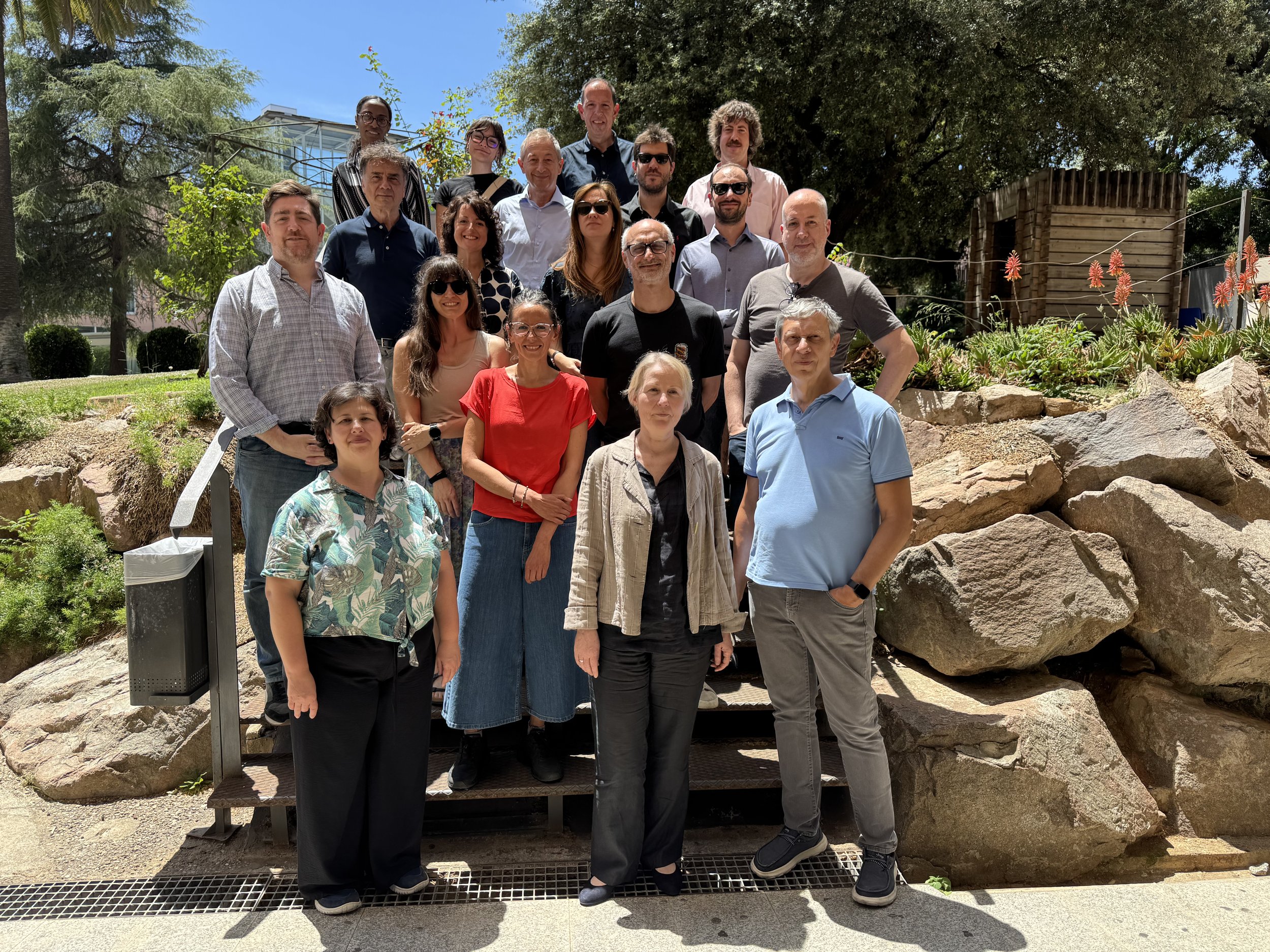
REAHUB, a project funded by the European Union under the LIFE Clean Energy Transition (LIFE CET) sub-programme, officially started on 1 June 2026. The consortium held its kick-off meeting on 18-19 June in Barcelona, Spain, marking the beginning of the project’s collaborative activities.
Coordinated by La Salle – Ramon Llull University, REAHUB brings together a multidisciplinary consortium of ten organisations from four European countries: Austria, Belgium, Italy and Spain, with expertise in research, public administration, digital technologies, consultancy, industry and capacity building. The project aims to support the implementation of the revised Energy Performance of Buildings Directive (EPBD) through practical, data-driven solutions.
REAHUB addresses one of the main challenges of building renovation in Europe: translating ambitious policy objectives into effective local action. To achieve this, the project is developing an integrated, data-driven framework that connects policies, data sources, digital tools and renovation processes into a coherent ecosystem, supporting evidence-based decision-making from the building to the city scale.
At the heart of the project is the REAHUB platform, which will operationalise the integrated framework by providing municipalities, policymakers, practitioners, financial institutions and building owners with the tools, procedures, services and training resources needed to support every stage of the renovation process. By bringing together existing data, methodologies and digital solutions, the platform will facilitate more coordinated renovation planning and implementation across different governance levels.
The framework will be developed and tested through pilot activities in Styria and Lower Austria (Austria), Piedmont (Italy) and Catalonia (Spain). These demonstration activities will provide practical insights and replicable solutions that can support building renovation efforts across Europe.
“The ambition of REAHUB is to encourage a more integrated approach to building renovation. The policies, tools and procedures needed to support renovation already exist; the challenge is to better connect the multiple data and information sources that underpin them, enabling more coordinated and better-informed decisions across different scales and governance levels”, says Leandro Madrazo, Project Coordinator at La Salle – Ramon Llull University.
The project is funded under the LIFE Clean Energy Transition (LIFE CET) sub-programme of the LIFE 2021- 2027 Programme, which supports the implementation of European energy and climate policies by strengthening governance, building capacity, mobilising investment and accelerating the uptake of clean energy solutions.
If you would like to participate in the REAHUB local implementation activities, please contact the Project Coordinator, Leandro Madrazo at leandro.madrazo@salle.url.edu

Bridging urban and building scales
REAHUB connects urban-scale priorities with building level action, operating across two interrelated dimensions. The framework is being validated through pilot initiatives in Austria, Italy and Spain, where each regional context presents distinct features and tests how integrated data and assessment methods can support the renovation process in practice. Across all three pilots, the work addresses two critical challenges:
1. Linking renovation to urban regeneration and sustainable development – Understanding where to prioritise renovation efforts and how to finance them
REAHUB combines Energy Performance Certificate (EPC) data with cadastral, socioeconomic and environmental information to produce a comprehensive diagnosis of the building stock — covering typology, age, energy class and consumption. This enables the identification of priority areas and building typologies, such as the least energy-efficient residential segments, while supporting renovation strategies that contribute to wider sustainability objectives, including social inclusion and the regeneration of underserved neighbourhoods.
2. Integrating multiple certification schemes for lifecycle building performance – Strengthening the data foundation for better decision-making
REAHUB integrates EPCs with Smart Readiness Indicators (SRIs) and Renovation Passport (RPs) schemes by establishing standardised cross-referencing procedures and semi-automated links between databases. This improves data quality, reliability and interoperability, enables RPs information to be incorporated into EPCs databases and Digital Building Logbooks. In doing so, the project provides evidence to support the further development of the Article 22 building database, including reporting processes to the Building Stock Observatory (BSO) and National Building Renovation Plans (NBRPs).
Coordinator
-
Fundació Privada Universitat i Tecnologia (FUNITEC). Ramon Llull University (URL) is a non-profit making federated private entity in Catalonia, structured under a federative agreement between the university, formal holder and responsible of the centres that form it, and the different entities that assume the management of each centre with their own human and technological resources.
Partners
-
The Catalonia Institute for Energy Research (IREC) is a publicly funded institution created in 2009 that conducts innovative research and innovation over a wide range of disciplines within the science and technology energy field. IREC contributes to sustainable development via development of new technological solutions, promotion of scientific and technological know-how related to clean energy and its efficient use as well transfer of solution and expertise to market actors
-
SERA is a boutique consulting and research institute. SERA’s services focus on the interface of
research, public administration and business consulting, in order to promote innovation for a
sustainable future.
-
PoliTO, founded in 1906 from the roots of the Technical School for Engineers created in 1859, has a long-standing tradition of leadership of polytechnic culture. It is one of the most important universities in Europe for engineering and architecture studies, strongly committed to collaboration with industry.
-
Edilclima S.r.l. is an Italian company established in 1977, with longstanding experience in the design of HVAC systems and in the development of technical software for energy efficiency and building compliance. In 1978, it was the first Italian company to create a dedicated software division focused on supporting HVAC and energy-related calculations.
-
Regione Piemonte is the managing authority of several strategic tools to drive the energy transition toward a low carbon economy in this Italian region. It is responsible for the management of the Energy Performance Certificates of the buildings for the whole region. So far, about 1.3 million EPCs have been issued at regional level and stored in a IT web platform (SIPEE)
-
4ward Energy is a non-profit research organization founded in 2010, specializing in energy research at both national and international levels. As a dedicated research facility, it has built extensive expertise in renewable energy, energy efficiency, smart grids, energy storage technologies, and building energy simulations. Through an interdisciplinary approach that combines technical research, economic modelling, and stakeholder engagement, 4ER is well positioned to contribute to REAHUB’s integrated methodology for building renovation.
-
ICONS is a non-profit organization whose mission is to boost research impacts on society via public communication, business and social innovation. Since more than 25 years ICONS is a key partner in EU-funded R&I projects